





1. Client Overview
This case study revolves around a two-layer operational ecosystem where we, a white label partner, enable a digital marketing agency to deliver better results to its end client.
The agency operates in a high-demand, mid-competition market, serving many SME clients but lacking deep expertise and scalable infrastructure. To overcome these limitations, the agency explored a white label agency partnership services model to strengthen its execution capabilities.
One of its most important accounts was a medium-sized ecommerce brand, which contributed significantly to its recurring revenue.
Agency context (operational layer)
The agency operated with a lean operational model focusing primarily on the following:
-
Customer Acquisition and Relationship Management
-
Basic campaign execution
-
Manual reporting and customization
However, its internal structure was lacking:
-
Dedicated experts for each marketing vertical
-
Advanced analytics interpretation capabilities
-
Automation-Driven Workflow
As demand grew, agencies began considering options for outsource digital marketing agency operations, especially for execution-heavy services.
End Customer Reference (Revenue Layer)
The end customer relied heavily on digital channels to:
-
Customer acquisition
-
Brand awareness
-
Sales conversion
Their business model requires consistent traffic, optimized funnels, and high conversion efficiency, with digital performance directly tied to revenue results.
Strategic Dependence
Agency survival depended on delivering measurable results to the client, while client growth depended on the agency’s execution quality.
This created a high pressure dependency loop:
Agency Performance → Client Results → Agency Retention → Revenue Continuity
2. The Problem
A. Agency-Level Problems (Operational Constraints)
1. Scalability Bottleneck
-
Each new client increased workload disproportionately
-
No delegation model for execution
-
Dependency on a small internal team
2. Execution Inefficiency
-
Campaign optimization cycles were inconsistent
-
Lack of data-backed decision making
-
No standardized frameworks for campaign management
3. Service Limitation
-
Could not offer advanced services like CRO, technical SEO, or funnel optimization
-
Lost upselling opportunities
B. End Client Problems (Performance Constraints)
1. Traffic-Conversion Gap
-
Traffic was increasing marginally, but conversions remained stagnant
-
Poor funnel structuring
2. Paid Media Inefficiency
-
High cost per acquisition
-
Weak targeting and audience segmentation
3. SEO Underperformance
-
Low domain authority
-
Weak keyword positioning
-
Minimal organic contribution to revenue
3. Identifying the Root Cause
A structured diagnostic approach revealed that the issue was systemic, not tactical.
Layer 1: Capability Gap (Agency)
-
Absence of domain specialists resulted in generic campaign strategies
-
Limited experimentation reduced optimization potential
-
No performance benchmarking system
Layer 2: Process Gap
-
No standardized reporting cadence
-
Lack of KPI-driven optimization cycles
-
Delayed response to performance drops
Layer 3: Strategy Gap (Client-Facing)
-
Campaigns focused on traffic, not conversion
-
No funnel-based marketing approach
-
Disconnected channels (SEO, PPC, social working in silos)
Critical Insight
The agency was solving tasks, not outcomes. This distinction became the turning point, shifting the approach from:
-
Execution-driven → Performance-driven
-
Channel-based → Funnel-based
Operational Complexity in Agency Client Management (changed)
As businesses expand and add additional customers, managing transportation will become more complex. Digital advertising is not a one-time effort. It requires non-stop execution which includes running campaigns, tracking performance, optimizing techniques, generating reports, and coordinating across a few channels. With each additional consumer on this ongoing load, demanding steady attention rather than a quick fix.
Over time, this increasing demand begins to create stress on internal groups. Resources are scarce, with crew members managing few expenses without dedicated expertise for each task. As a result, strategies become much less green, deadlines begin to slip, and the non-stop optimization required for strong performance begins to decline.
At this stage, several operationally challenging situations become obstructive:
-
Bandwidth Saturation:
Teams perform at or near full capacity, leaving minimal room for strategic enquiry or experimentation.
-
Inconsistent delivery quality:
Limited expertise results in overall performance across all channels, including SEO and PPC.
-
Delayed Optimization Cycle:
Campaign upgrades slow down due to competing priorities and workload stress
-
Restricted Scalability:
Each new customer provides additional operational burden, making sustainable growth difficult
Ultimately, the project lies not in functionality, but in preserving operational performance at scale. Without structural changes, companies reach a point where the growth begins to compromise overall performance rather than strengthening it.
Why Agencies Transition Toward Outsourcing (changed)
As operational pressures increase, agencies begin to re-evaluate how their assets are allocated. A clear distinction emerges between high-fee capabilities such as strategy, client managing, and rapid planning and execution of heavy tasks, which do not contribute to differentiation without delay.
This realisation inspires strategic exchanges. Instead of scaling internal teams, organizations are increasingly turning to outsourcing as a way to optimize resource utilization and improve operational performance.
Outsourcing enables teams to delegate execution to specialized groups as well as retain control over strategic direction. This separation provides internal teams with more awareness, while ensuring consistent and structured delivery externally.
This change is generally encouraged through 3 key factors:
-
Efficiency:
External teams work with a defined strategy, reducing delays and improving continuity.
-
Expertise:
Access to specialized talent enables high-quality execution without the need for in-house hiring.
-
Scalability:
Agencies can increase clients without proportionately increasing internal resources.
Ultimately, outsourcing evolves from a capacity to capability decision that focuses on improving functionality, and specific operational efficiency without overburdening internal teams.
Evaluating Outsourcing: Benefits and Trade-offs (changed)
Outsourcing offers clear operational benefits, although it also requires structured oversight to be effective. When implemented well, it strengthens transportation by offering defined strategies, specialized information, and examples of rapid turnaround. This typically results in more consistent campaign performance and improved customer results.
Execution is no longer internalized at all, meaning agencies must rely on clean processes, negotiations, and performance monitoring to maintain alignment.
In practice, the choice depends on balancing benefits with disadvantages:
Key benefits:
-
Better performance through specialized knowledge
-
Fast transport cycles supported through committed resources
-
Decreased internal workload and operational stress
-
Greater scalability without increasing headcount
Limitations:
-
Limited direct control on daily execution
-
Dependency on partner reliability and continuity
-
Need for structured communication and performance monitoring
Ultimately, outsourcing provides the most value when dealt with as an extension of a company’s operations rather than a separate function. Maintaining strategic ownership internally, while leveraging structured external execution, guarantees superior performance without compromising control.
Risk – Reward Dynamics and Cost Efficiency (changed)
From a business perspective, outsourcing represents a change in how agencies deal with both value management and operational risk. Expansion of in-house groups requires fixed investments in salaries, tools and infrastructure costs that remain constant regardless of workload and financial stress can increase as the agency scales.
In comparison, outsourcing introduces an additional flexible, variable cost structure. Expenses are aligned to the amount of actual work added, allowing agencies to expand operations without long-term financial commitments. This method not only reduces financial risk but also improves the cost efficiency too.
The trade-off lies in the type of risk involved:
-
In-house model:
Higher financial risk due to fixed overheads
-
Outsourced model:
Operational risk related to coordination and dependency
When managed effectively, operational risks can be controlled through defined processes, while financial risks are significantly reduced.
The reward side is more substantial:
-
Greater scalability without proportional cost increase
-
Improved profit margins through optimized resource allocation
-
Faster response to client demands and market changes
In essence, outsourcing enables agencies to transition from a fixed, resource-heavy model to a more flexible and performance-driven structure. The result is not just cost savings, but a more efficient system that supports sustainable growth.
4. What We Improved
-
Beyond channel-specific improvements, the engagement focused on resolving the structural gaps identified during the diagnostic phase. The objective was not just to improve performance metrics, but to correct the underlying operational, process, and strategic inefficiencies that were limiting scalability.
4.1 SEO (From Visibility to Authority Building)
Execution Strategy
-
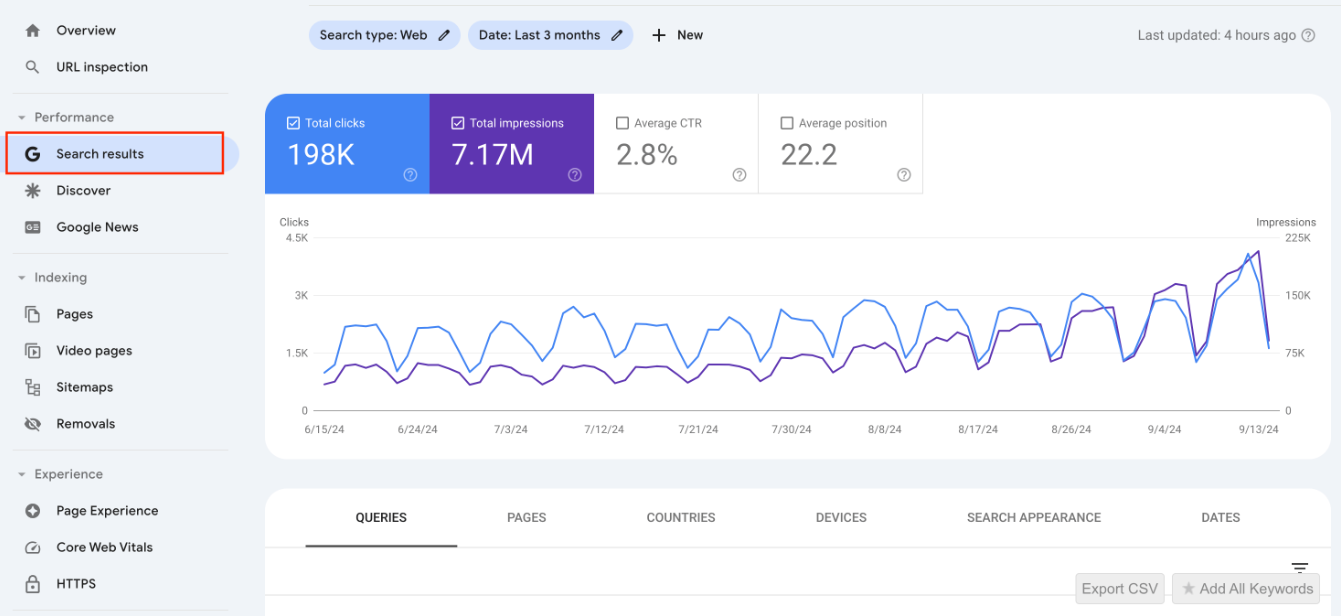
Conducted full technical SEO audit (crawlability, indexing, schema)
-
Built structured backlink acquisition campaigns
-
Implemented topic clusters and content silos
-
Optimized on-page elements for search intent
Agency Enablement
-
Delivered white-labelled reports with branding
-
Reduced internal workload by 40%
-
Enabled upselling of SEO retainers by acting as a seo reseller services provider
End Client Impact
-
Strong increase in organic visibility
-
Reduced dependency on paid traffic
-
Improved trust signals (authority metrics)
-
4.2 PPC (From Spend to Profitability)
Execution Strategy
-
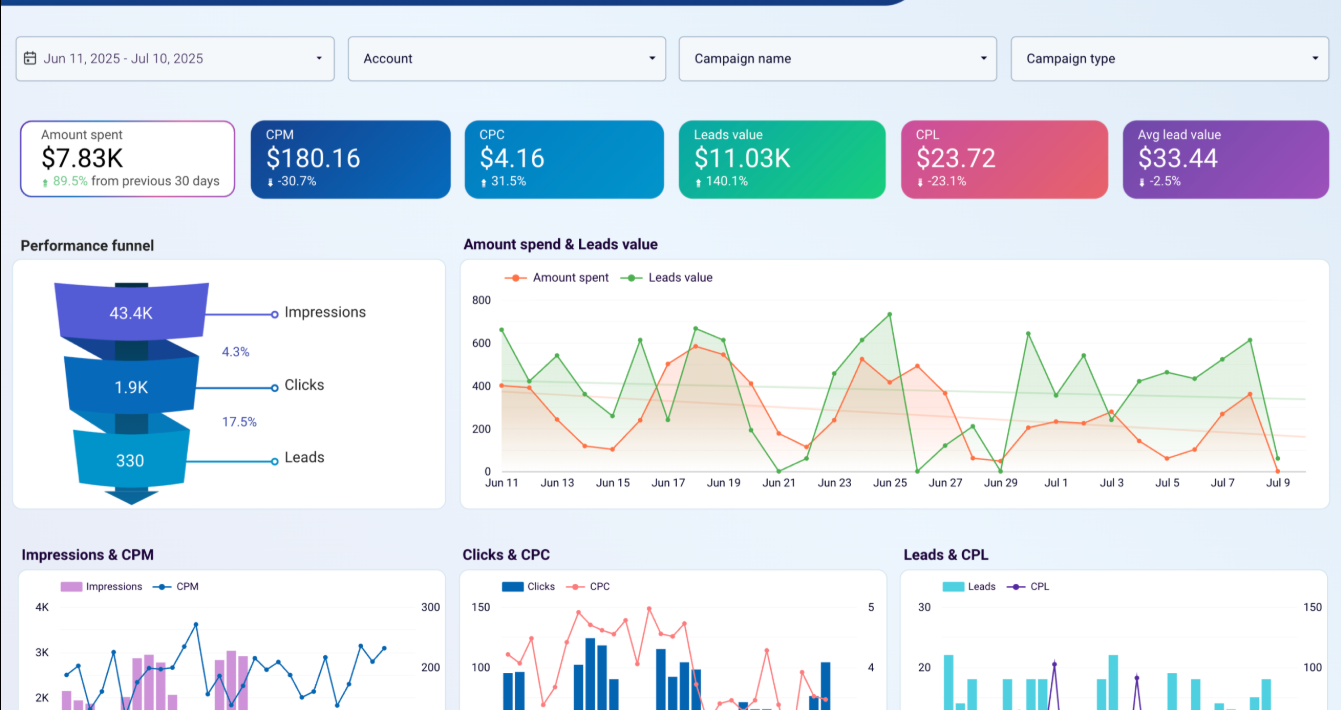
Funnel-based campaign structuring (Awareness → Consideration → Conversion)
-
Advanced audience segmentation
-
Continuous A/B testing
-
Budget reallocation based on performance
4.3 Social Media Optimization
Execution Strategy
-
Data-backed content calendar
-
Engagement-first content (not just promotional)
-
Influencer collaborations
-
Platform-specific optimization
4.4 CRO & Website Optimization
Execution Strategy
-
Funnel redesign (landing → product → checkout)
-
UI/UX improvements
-
Page speed optimization
-
Behavioral analytics integration
4.5 Integration of Domain Expertise into Execution
To overcome the lack of domain expertise, a specialist-driven execution model was implemented. Each marketing function SEO, PPC, and CRO was handled by dedicated experts with defined ownership and accountability.
This shift ensured that campaign strategies were no longer generic but built on platform-specific best practices, performance data, and continuous experimentation. Structured testing frameworks were introduced to replace assumption-based decisions, enabling consistent optimization across all channels.
In addition, performance benchmarking systems were established to evaluate outcomes against industry standards and historical data, creating a more objective and measurable approach to growth.
4.6 Bringing Structure and Consistency to Delivery
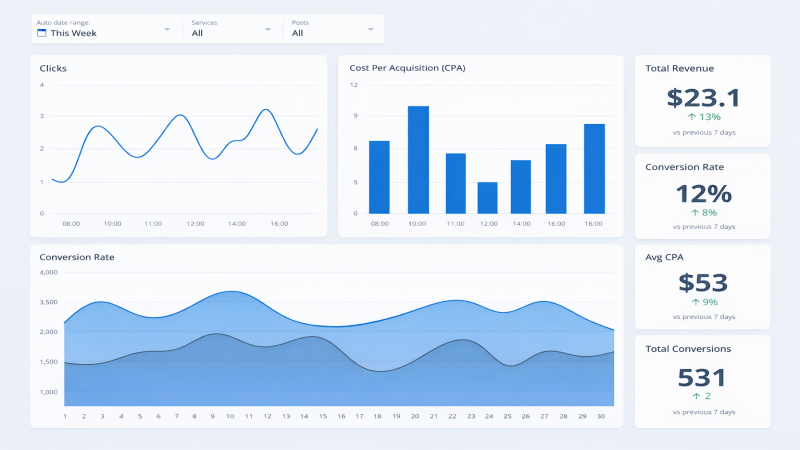
Operational inefficiencies were resolved by introducing structured workflows and standardized execution cycles. Reporting was transitioned from ad-hoc updates to a fixed cadence, supported by automated dashboards and white-labelled reports. KPI-driven optimization became central to campaign management. Each channel was aligned with clearly defined performance indicators, and optimization cycles were scheduled based on data signals rather than manual intervention.
To eliminate delays in response time, monitoring systems were implemented to track performance fluctuations in real time, allowing for quicker corrective actions. This significantly improved turnaround times and ensured that campaigns remained consistently optimized.
4.7 Connecting Channels Through a Funnel-Led Approach
A major shift was made in how marketing efforts were structured. Instead of managing SEO, PPC, and social media as independent channels, a unified funnel-based approach was introduced. Campaigns were restructured to align with different stages of the customer journey like awareness, consideration, and conversion, ensuring that traffic generation was directly linked to revenue outcomes.
This eliminated the earlier disconnect where channels operated in silos without contributing to a common objective. Conversion rate optimization was integrated into the strategy, ensuring that increased traffic translated into measurable business results. Landing pages, user journeys, and checkout flows were optimized to improve conversion efficiency across the funnel.
4.8 Shifting Focus from Tasks to Measurable Outcomes
Instead of focusing on completing activities (campaign launches, reports, updates), the emphasis moved toward achieving measurable results such as improved ROI, higher conversion rates, and increased customer acquisition efficiency.
This was enabled through:
-
Data-backed decision-making frameworks
-
Continuous A/B testing and experimentation
-
Integrated performance tracking across all channels
4.9 Strengthening Agency Operations
By addressing the identified root causes, the agency transitioned from a fragmented and capacity-constrained model to a more structured and scalable system.
Execution became:
-
More specialized
-
More consistent
-
More aligned with business outcomes
This not only improved campaign performance but also reduced operational strain, enabling the agency to scale its client base without compromising delivery quality.
5. Consolidated Outcomes
A. Agency-Level Transformation
-
Shifted from capacity-limited → scalable operations
-
Increased delivery bandwidth without additional hiring
-
Improved client retention and service consistency
-
Expanded into a full-service digital marketing agency
B. End Client Transformation
-
Revenue growth driven by better funnel efficiency
-
Reduced reliance on paid acquisition channels
-
Improved brand visibility and engagement
-
Higher marketing efficiency and ROI
C. Combined KPI Growth
6. Final Insights
1. White Labelling is a capability multiplier
It transforms agencies from limited operators into scalable service providers, which is why many agencies adopt white label digital marketing agencies as growth partners.
2. Execution & Strategy must be decoupled
Agency → Strategy & client handling
White label → Execution & optimization
3. Funnel Thinking is critical
Traffic alone does not drive revenue, conversion systems do.
4. Data-Driven Optimization is non-negotiable
Every improvement observed was backed by:
-
A/B testing
-
Analytics
-
Iterative optimization
Final Conclusion
This case demonstrates that white labelling is not just outsourcing, it is a strategic growth infrastructure. By integrating specialized execution capabilities behind the scenes:
-
The agency retained and scaled its client base
-
The end client achieved measurable business growth
-
The entire ecosystem became performance-driven and sustainable